
How Can Summer Window Maintenance Keep Your Home Cool and Energy Efficient?
Key Takeaways
- Well-maintained windows can help keep your home cooler by reducing heat gain and preventing conditioned air from escaping.
- Checking for air leaks, damaged weatherstripping, and worn seals can improve energy efficiency and lower cooling costs.
- Cleaning window tracks and screens helps windows operate properly and supports better airflow throughout your home.
- Managing direct sunlight with blinds, shades, or other solutions can reduce indoor temperatures during hot summer days.
- Regular inspections can help identify small issues before they become costly repairs.
- Older windows that are drafty or difficult to operate may benefit from replacement to improve comfort and energy performance.
When summer temperatures arrive, most homeowners focus on their air conditioning system to stay comfortable. While your HVAC system certainly plays an important role, your windows can have a significant impact on how cool and energy efficient your home remains throughout the season.
Windows are one of the main areas where heat can enter your home. If they aren’t properly maintained, they can allow conditioned air to escape and force your cooling system to work harder than necessary. According to the U.S. Department of Energy, heat gain and heat loss through windows account for approximately 25% to 30% of residential heating and cooling energy use. The Department of Energy’s article on energy-efficient windows, doors, and skylights explains how proper window performance can help improve comfort while reducing energy consumption.
The good news is that keeping your windows in good condition doesn’t require a major investment. A few simple maintenance tasks can help improve efficiency, reduce strain on your HVAC system, and keep your home more comfortable during the hottest months of the year.
Check for Air Leaks Around Your Windows
One of the easiest places to start is by looking for air leaks. Even small gaps around window frames can allow cool air to escape while letting warm outdoor air enter your home.
Over time, caulking and weatherstripping can deteriorate due to exposure to sunlight, moisture, and changing temperatures. As these materials wear down, your windows become less effective at maintaining a consistent indoor temperature.
As you inspect your windows, look for:
- Cracked or missing caulk
- Damaged weatherstripping
- Visible gaps around frames
- Drafts near closed windows
Addressing these issues can help improve energy efficiency and reduce cooling costs. A recent article from Bob Vila on making windows more energy efficient notes that sealing gaps and improving insulation around windows can help prevent unnecessary energy loss and improve overall home comfort.
Clean Window Tracks and Screens
Window maintenance isn’t just about the glass itself. Tracks and screens can collect dust, pollen, dirt, and debris throughout the year.
When tracks become clogged, windows may not close completely, leaving small openings that impact energy efficiency. Dirty screens can also restrict airflow and reduce the benefits of natural ventilation.
A seasonal cleaning routine should include:
- Vacuuming debris from tracks
- Wiping tracks clean with a damp cloth
- Washing screens with mild soap and water
- Repairing torn screens
- Testing windows to ensure smooth operation
Keeping these components clean helps your windows function properly and can make a noticeable difference in overall performance.
Inspect Window Seals for Wear and Damage
Window seals play a critical role in preventing unwanted heat transfer. If seals become damaged or deteriorate over time, your home’s cooling efficiency can suffer.
Common signs of seal problems include:
- Cracked or brittle materials
- Gaps around the sash
- Increased drafts
- Moisture-related issues
Taking the time to inspect seals each summer can help identify problems before they become more serious. Properly sealed windows help keep cool air inside and reduce the workload on your air conditioning system.
Reduce Heat Gain from Direct Sunlight
Have you ever noticed that certain rooms become significantly warmer than others during the afternoon? In many cases, direct sunlight through windows is the culprit.
Managing solar heat gain can make a noticeable difference in both comfort and energy use. Depending on your home’s orientation, south- and west-facing windows may allow substantial amounts of heat to enter during the day.
Consider strategies such as:
- Closing blinds or shades during peak sunlight hours
- Using blackout curtains in warmer rooms
- Installing solar screens
- Applying heat-reducing window film where appropriate
According to a recent article from ATCO Energy on keeping your home cool during summer, limiting direct sunlight through windows can help reduce indoor temperatures and lessen the demand placed on air conditioning systems.
Examine Window Frames and Hardware
Summer is also a good time to inspect window frames and hardware for signs of wear.
Different window materials can experience different issues over time. Wood frames may show signs of moisture damage or rot, while aging vinyl frames can sometimes warp after years of exposure to changing weather conditions.
As part of your inspection, look for:
- Cracks in the frame
- Peeling paint or finishes
- Soft or deteriorating wood
- Warping or bowing
- Loose locks, handles, or hinges
Addressing minor issues early can help extend the life of your windows and prevent more extensive repairs later.
Take Advantage of Natural Ventilation
Not every summer day requires running the air conditioner around the clock. When outdoor temperatures are cooler in the morning or evening, opening windows can help improve airflow and naturally cool your home.
Creating cross-ventilation by opening windows on opposite sides of the house can encourage warm indoor air to exit while allowing cooler outdoor air to enter. This simple strategy can improve comfort and reduce reliance on mechanical cooling during milder periods.
Of course, natural ventilation works best when windows open easily and seal tightly when closed, making regular maintenance especially important.
Know When Maintenance May Not Be Enough
While regular maintenance can help extend the lifespan of your windows, older units may eventually reach a point where repairs offer limited benefits.
You may want to consider replacement windows if you experience:
- Persistent drafts despite repairs
- Condensation between panes of glass
- Difficulty opening or closing windows
- Rising energy bills
- Significant frame deterioration
Modern replacement windows are designed with advanced energy-efficient features that help minimize heat transfer and air leakage. In many cases, upgrading older windows can improve comfort, lower energy costs, and enhance curb appeal at the same time.
Keep Your Home Comfortable All Summer Long
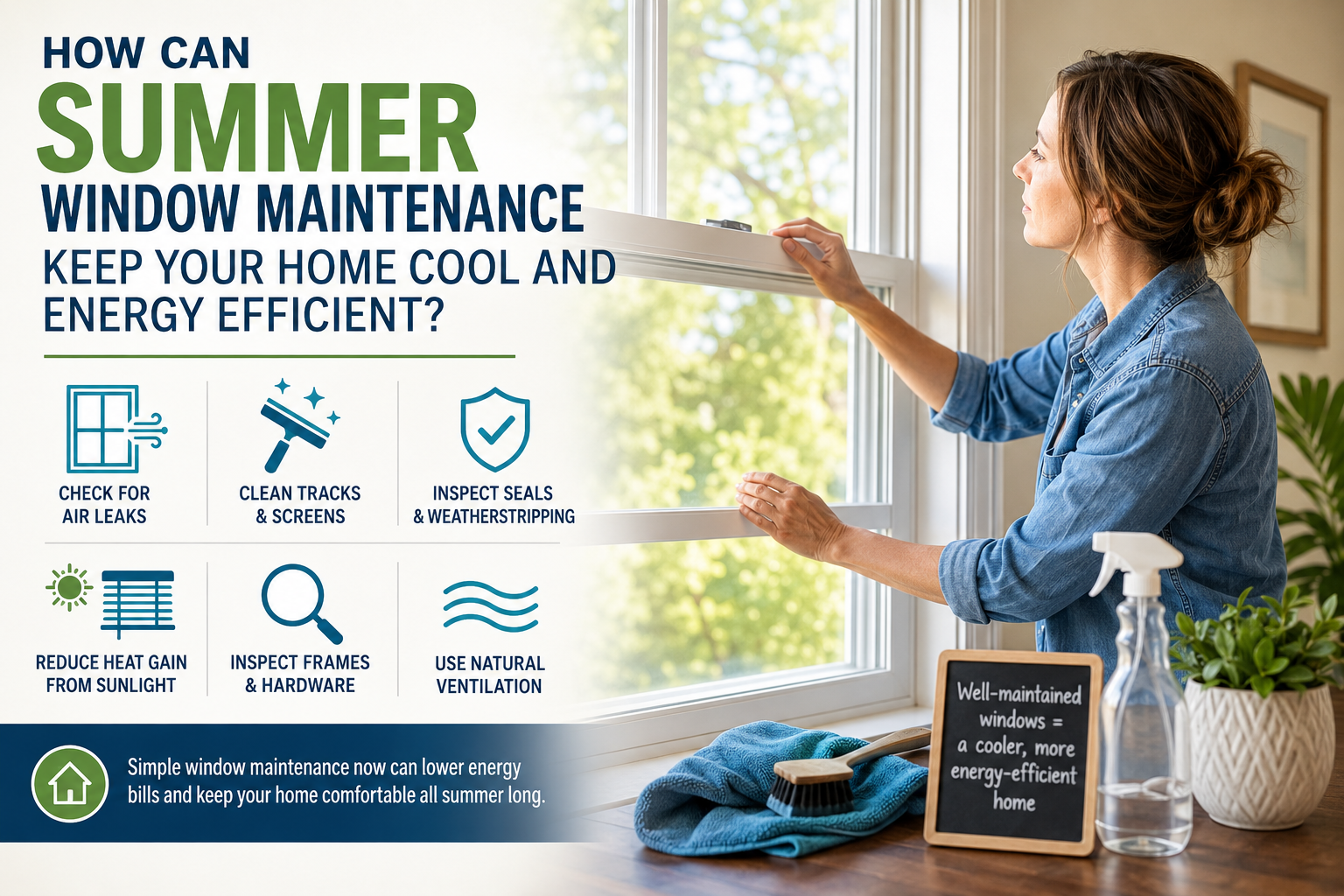
Summer window maintenance is a simple yet effective way to improve your home’s comfort and energy efficiency. By checking for air leaks, cleaning tracks and screens, inspecting seals, managing solar heat gain, and addressing minor issues early, you can help your windows perform their best throughout the season.
These small maintenance tasks can make a meaningful difference in how hard your cooling system has to work and how comfortable your home feels on hot summer days. And if your windows are showing signs of age or no longer providing the performance you need, exploring replacement options may be the next step toward a more comfortable and energy-efficient home.