
How Can Marvin ULTIMATE Specialty Shape Windows Preserve Historic Building Character?
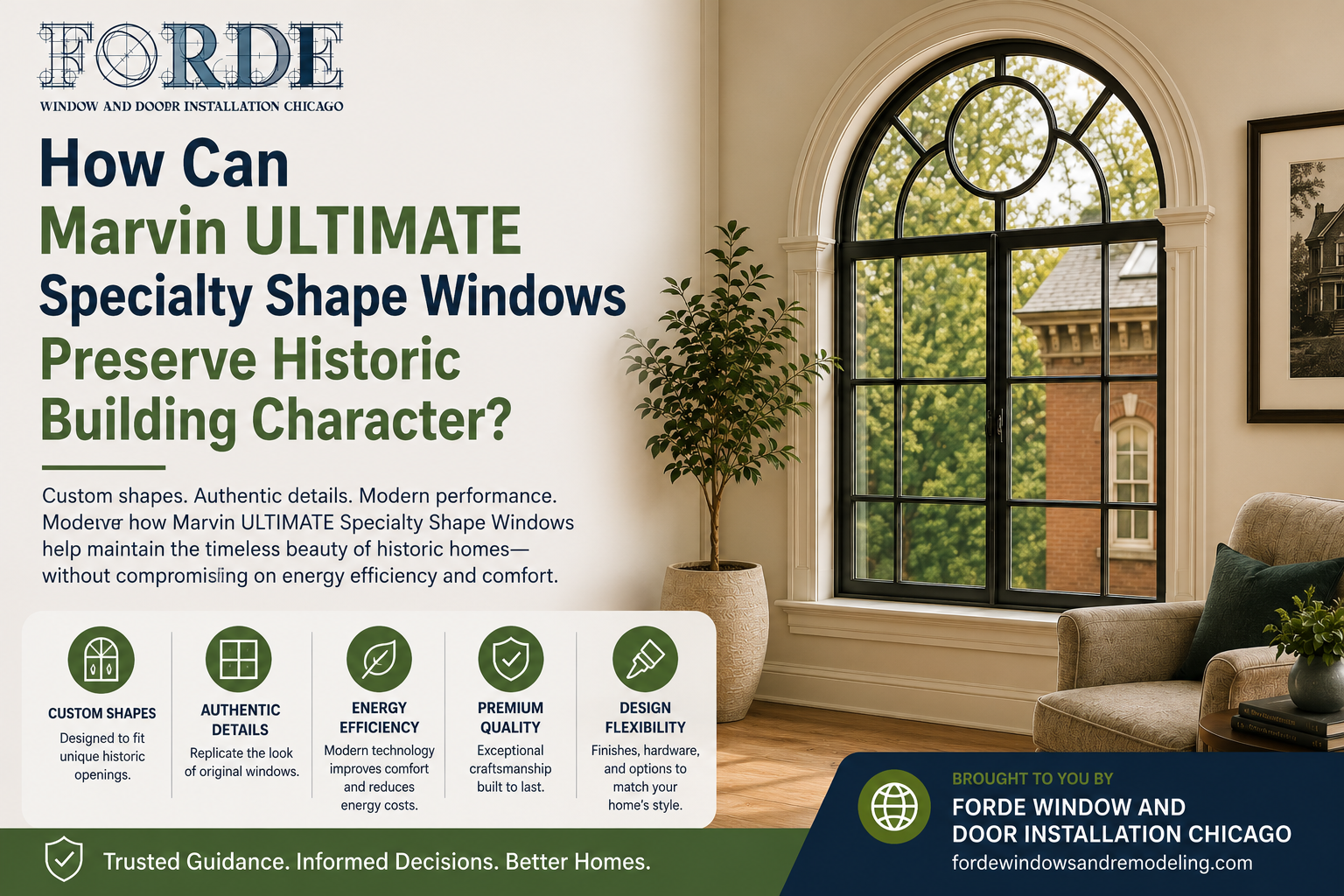
How Can Marvin ULTIMATE Specialty Shape Windows Preserve Historic Building Character?
Key Takeaways
- Marvin® ULTIMATE Specialty Shape Windows are custom built to fit the distinctive architectural openings commonly found in historic buildings.
- You can preserve a historic building’s original architectural character while upgrading to modern energy-efficient window technology.
- Custom shapes, authentic divided lites, premium wood interiors, and extensive finish options help maintain the building’s historic appearance.
- Replacing aging windows doesn’t have to compromise architectural integrity when you choose products specifically designed for restoration and preservation projects.
- Working with an experienced Marvin installer like Forde Windows helps ensure your replacement windows are installed with precision while respecting the building’s original design.
Historic buildings have a character that’s impossible to duplicate. Whether you’re restoring a century-old commercial building, church, school, municipal property, university, estate, or historic residence, the architectural details are what make the building memorable. Elegant arches, circular windows, Gothic openings, and custom geometric designs don’t simply let in natural light—they’re defining features that tell the building’s story.
If you’re restoring or rehabilitating a historic building, replacing aging windows can feel like one of the biggest challenges. The wrong replacement windows can dramatically change the appearance of a historic façade, diminishing the craftsmanship and architectural character that has endured for generations.
Fortunately, you don’t have to choose between preserving historic character and improving building performance. Marvin ULTIMATE Specialty Shape Windows are custom manufactured to fit unique architectural openings while delivering the energy efficiency, durability, and craftsmanship expected from modern window systems. Instead of altering original openings to accommodate standard window sizes, these windows are designed to complement the building’s existing architecture.
At Forde Windows, we proudly install Marvin ULTIMATE Specialty Shape Windows as one of our preferred premium window solutions for restoration and preservation projects. We recommend Marvin because of its exceptional craftsmanship, extensive customization options, and ability to create windows that respect a building’s original architectural design while providing the comfort, durability, and energy efficiency expected today.
Let’s explore how Marvin ULTIMATE Specialty Shape Windows can help preserve the architectural character of historic buildings while preparing them for decades of continued use.
Specialty Windows Are Part of a Historic Building’s Story
When people admire a historic building, they rarely focus on a single feature. Instead, they’re drawn to the combination of architectural details that create its identity. Ornamental masonry, decorative trim, handcrafted millwork, intricate stonework, and uniquely shaped windows all work together to define the building’s character.
Specialty-shaped windows play an especially important role. An elegant arch above an entrance, a circular window centered in a gable, or a Gothic opening in a historic church can become one of the building’s most recognizable features. Replacing those windows with standard rectangular units can permanently alter the appearance and architectural balance of the structure.
If you’re planning a restoration or rehabilitation project, preserving those defining architectural elements should remain a top priority.
The Secretary of the Interior’s Standards for Rehabilitation emphasize retaining and protecting character-defining architectural features whenever possible. These nationally recognized preservation guidelines encourage restoration approaches that maintain historic authenticity while allowing buildings to continue serving modern needs.
Selecting replacement windows that closely match the originals is one of the most effective ways to preserve a building’s architectural identity while extending its useful life.
Every Historic Building Presents Unique Challenges
Unlike modern construction, historic buildings rarely follow standardized dimensions. Window openings were often handcrafted, with subtle variations in size, proportion, curvature, and decorative detailing. As a result, finding an off-the-shelf replacement window that fits correctly is rarely an option.
That’s where Marvin ULTIMATE Specialty Shape Windows truly stand out.
Rather than asking you to modify the building’s original openings, Marvin custom manufactures windows to fit them precisely. This allows you to preserve the architect’s original vision while benefiting from today’s advanced materials and engineering.
Whether your project includes:
- Grand arched windows
- Circular accent windows
- Gothic arches
- Eyebrow windows
- Octagonal openings
- Hexagonal windows
- Trapezoids
- Triangles
- Pentagons
- Custom geometric configurations
Marvin can manufacture specialty windows that complement the building’s existing architecture rather than forcing costly design compromises.
This flexibility is especially valuable when restoring landmark buildings where maintaining original proportions is essential to preserving historical significance.
The Small Details Preserve Historic Character
Matching the overall shape of a window is only the beginning.
Historic buildings are known for exceptional craftsmanship, and it’s often the finer architectural details that make the greatest impact. Frame profiles, divided lite patterns, wood species, hardware finishes, decorative glass, and exterior colors all contribute to the authenticity of a restoration project.
That’s why Marvin offers extensive customization options designed to help replacement windows blend naturally with existing architecture.
Available options include:
- Authentic divided lite patterns
- Premium wood interior species
- Durable aluminum-clad exteriors
- Custom exterior color finishes
- Historic-inspired hardware
- Decorative and specialty glass
- Factory-applied finishes
- Multiple glazing configurations
These details allow architects, preservation professionals, and building owners to create replacement windows that closely resemble the originals while incorporating modern performance enhancements.
When these design elements are carefully matched, the replacement windows appear as though they’ve always belonged on the building.
If you’re evaluating which historic features should be preserved, Marvin’s educational resources on historic window replacement provide practical guidance for balancing preservation goals with modern performance requirements.
Modern Performance Without Sacrificing Historic Character
Preserving a historic building doesn’t mean you have to accept poor energy performance.
Many older buildings still contain aging single-pane windows that allow significant heat transfer, drafts, and air leakage. During the summer, unwanted solar heat enters the building. During the winter, conditioned air escapes. Over time, this places additional strain on HVAC systems while increasing operating costs.
Marvin ULTIMATE Specialty Shape Windows combine traditional craftsmanship with advanced engineering, allowing you to improve energy efficiency without changing the building’s architectural appearance.
Depending on your project requirements, available features include:
- Low-E glass coatings that reduce solar heat gain
- High-performance insulated glass packages
- Durable aluminum-clad exteriors
- Premium wood interiors
- Advanced weather protection systems
- Improved air infiltration performance
The result is a building that retains its historic beauty while offering greater comfort, improved thermal performance, and lower energy consumption.
Modern window technology allows restoration projects to meet today’s performance expectations without sacrificing the architectural features that make historic buildings unique.
Restore Historic Buildings Without Compromising Their Character
Restoring historic buildings requires a careful balance between modern performance and architectural integrity. The goal is not to replace what makes the structure unique, but to enhance it while preserving its original design language. Whether it’s a heritage townhouse, a century-old civic building, or a protected commercial structure, any window upgrade must respect proportions, sightlines, and traditional detailing.
Modern window systems can be engineered to replicate historic profiles while delivering improved insulation, durability, and weather resistance. This allows restoration projects to maintain authenticity without sacrificing comfort or efficiency.
Preserve Historic Architecture Through Natural Light
Natural light is one of the most defining elements of historic architecture. Large sash windows, tall casements, and carefully positioned glazing were often designed to bring daylight deep into interior spaces long before electric lighting was standard.
When restoring historic buildings, maintaining these light patterns is essential. The right glazing solutions can improve clarity and thermal performance while still honoring original frame divisions and glass proportions. Slim sightlines and heritage-style profiles help ensure that daylight remains a central feature of the building’s character.
Choosing the Right Windows for Historic Buildings
Selecting windows for historic buildings is not just a technical decision—it is an architectural one. The wrong choice can disrupt the entire visual harmony of a façade, while the right choice can restore it.
Key considerations include:
- Profile accuracy: Matching original frame thickness and sightlines
- Material compatibility: Timber or timber-alternative systems that reflect traditional craftsmanship
- Glazing options: Energy-efficient glass that still resembles historic glazing patterns
- Opening styles: Sash, casement, or custom configurations that align with the building’s era
- Regulatory compliance: Meeting conservation area or listed building requirements
The best solutions are those that feel visually indistinguishable from the original while performing to modern standards.
Why Professional Installation Matters
Even the highest-quality window system can underperform if installed incorrectly. Historic buildings often present uneven openings, structural irregularities, and fragile surrounding materials that require specialist handling.
Professional installers experienced in heritage properties understand how to:
- Protect original masonry and façade details
- Achieve airtight seals without damaging historic fabric
- Maintain alignment with existing architectural geometry
- Ensure compliance with conservation guidelines
Precision installation is critical not only for performance, but for preserving the building’s long-term integrity.
Why Forde Windows Is the Right Marvin Installer
When working with premium systems like Marvin, expertise in both product and heritage application matters. Forde Windows brings that specialised knowledge to historic restoration projects, ensuring each installation respects the building’s original design intent.
Their approach focuses on:
- Careful assessment of historic detailing before specification
- Accurate matching of window profiles to period architecture
- High-quality installation techniques suited to older structures
- Delivering modern efficiency without visual compromise
This combination of craftsmanship and technical understanding makes them a strong fit for sensitive restoration work where precision is essential.
Conclusion
Restoring historic buildings is about more than upgrading windows—it is about protecting architectural heritage while adapting spaces for modern use. With the right materials, design approach, and installation expertise, it is possible to improve energy efficiency, comfort, and durability without altering the building’s original identity.
Thoughtful window selection and skilled installation ensure that historic buildings continue to stand with both character and performance intact.
FAQs: Historic Building Window Restoration
- Can you replace windows in a listed historic building?
Yes, but replacements usually require approval and must match the building’s character in design, materials, and proportions. - What type of windows are best for historic buildings?
Traditionally styled timber or timber-alternative windows with slim profiles are often preferred for maintaining authenticity. - How do modern windows preserve historic appearance?
They replicate original sightlines, glazing patterns, and frame details while using modern materials for insulation and durability. - Will new windows affect the value of a historic property?
Sensitive, well-executed replacements can enhance both comfort and value, especially when they preserve architectural integrity. - Why is specialist installation important for heritage properties?
Historic buildings often have irregular structures and fragile materials, requiring expert handling to avoid damage and ensure proper fit.